

Factory
Inside the MIXVIEN Factory: 1,327 m², Three Lines, 29 Models
Published
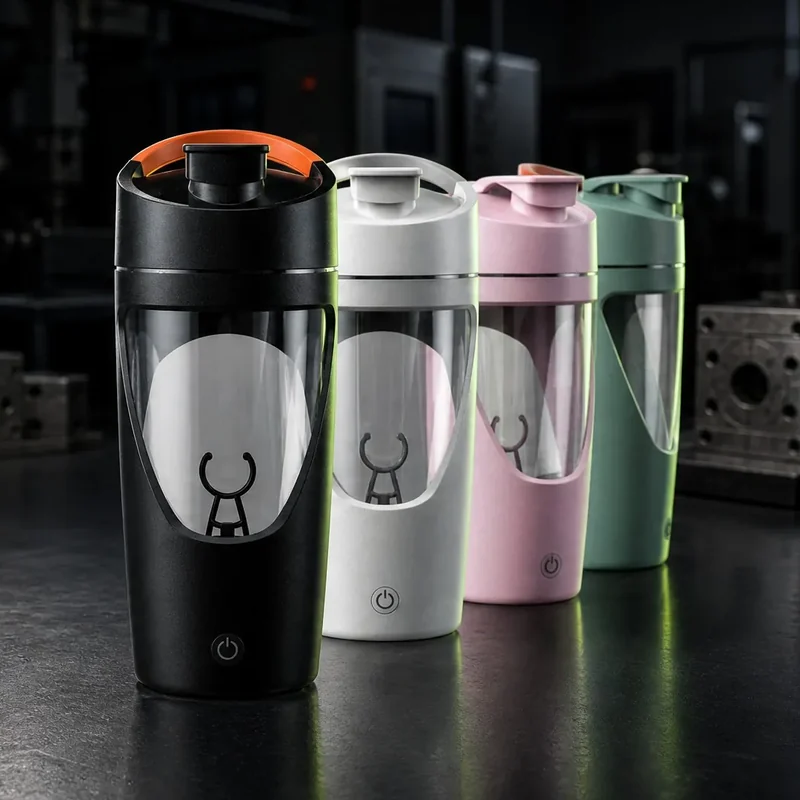
A walk through the MIXVIEN electric shaker bottle factory in Dongguan: 1,327 m² of floor space, three production lines, 24 machines and 30 new models a year.
Almost every supplier page says "we are a factory". Far fewer explain what the floor actually contains. This article goes through the MIXVIEN production building in Dongguan, Guangdong, where the electric shaker bottles, portable blenders, smart stirring cups and juice separation cups in our catalogue are made.
What 1,327 m² actually contains
Our production building covers 1,327 m². In practical terms that space is divided between four areas: incoming goods and component storage, plastic injection and tooling, final assembly, and a separate testing and inspection area. Keeping testing physically separate from assembly matters more than it sounds — it means an assembled unit is inspected away from the line it came off, rather than by the same operator who built it.
| Metric | Value |
|---|---|
| Export experience | 23 years |
| Production building | 1,327 m² |
| Production lines | 3 |
| Machines | 24 |
| New models developed | 30 per year |
| On-time delivery | 95.7% |
| Average response time | ≤4 hours |
Those figures come from our trade profile. The rest of this article explains how each one affects an order.
Three lines, twenty-four machines
The plant runs three production lines and 24 machines. The line split is deliberate: multiple lines let us run a repeat order on one line while a new model is still being trialled on another, instead of stopping existing production to fit in every new job. For a buyer, that is the difference between a trial order and a repeat order competing for the same capacity.
Tooling stays in-house. Our equipment list covers the whole chain from mould-making through decoration and final sealing:
- Injection Molding Machine
- Electrical Discharge Machine
- Grinding Machine
- Lathe
- Milling Machine
- Pad Printing Machine
- Ultrasonic Welding Machine
- Environmental Protection Purification Equipment
Electrical discharge, grinding, turning and milling in the same building mean a worn mould can be repaired without shipping it to a third party and waiting in their queue. Pad printing and ultrasonic welding in-house mean branding and housing sealing are controlled on site rather than subcontracted. The purification equipment handles the extraction duty that plastic processing and printing require.
Lead times buyers can plan around
Two numbers define how quickly a programme can start. A sample is prepared in 3 days, and production runs to a standard 30-day lead time after the sample is approved. Enquiries are answered within 4 hours on average.
| Stage | Standard lead time |
|---|---|
| Sample prepared | 3 days |
| Production after sample approval | 30 days |
| Enquiry response | ≤4 hours |
Buyers planning a retail or distribution window should treat the 30 days as starting from sample approval, not from the enquiry — which is why the 3-day sample turnaround matters. Getting a physical sample in your hands quickly is what unlocks the rest of the schedule.
Thirty new models a year
We develop around 30 new models a year. Some are new moulds, some are variants of an existing platform with a different capacity, material or colourway. The catalogue currently lists 29 models across four categories: shaker bottles, portable blenders, smart stirring cups and juice separation cups, with capacities from 260 ml to 800 ml. That range exists because buyers in different markets ask for different things — a 300 ml cup for personal use, a 700 ml bottle for meal replacement, an 800 ml jar for family-size blending.
Three ports, three routing options
Goods ship through three South China ports, which gives some flexibility on routing and sailing schedules:
- Guangzhou port
- Foshan port
- Shenzhen port
Which port is used depends on the destination and the sailing the forwarder books. If your own forwarder has a preferred port, tell us at the quotation stage and we will confirm whether it can be used.
What this means for your order
The practical summary: a 3-day sample, a 30-day production lead time, three lines that can absorb repeat business alongside new development, and tooling held in-house so a mould problem does not stall a shipment. Minimum order quantities and pricing vary by model and are confirmed on quotation.
Related models
Models referenced in this article.
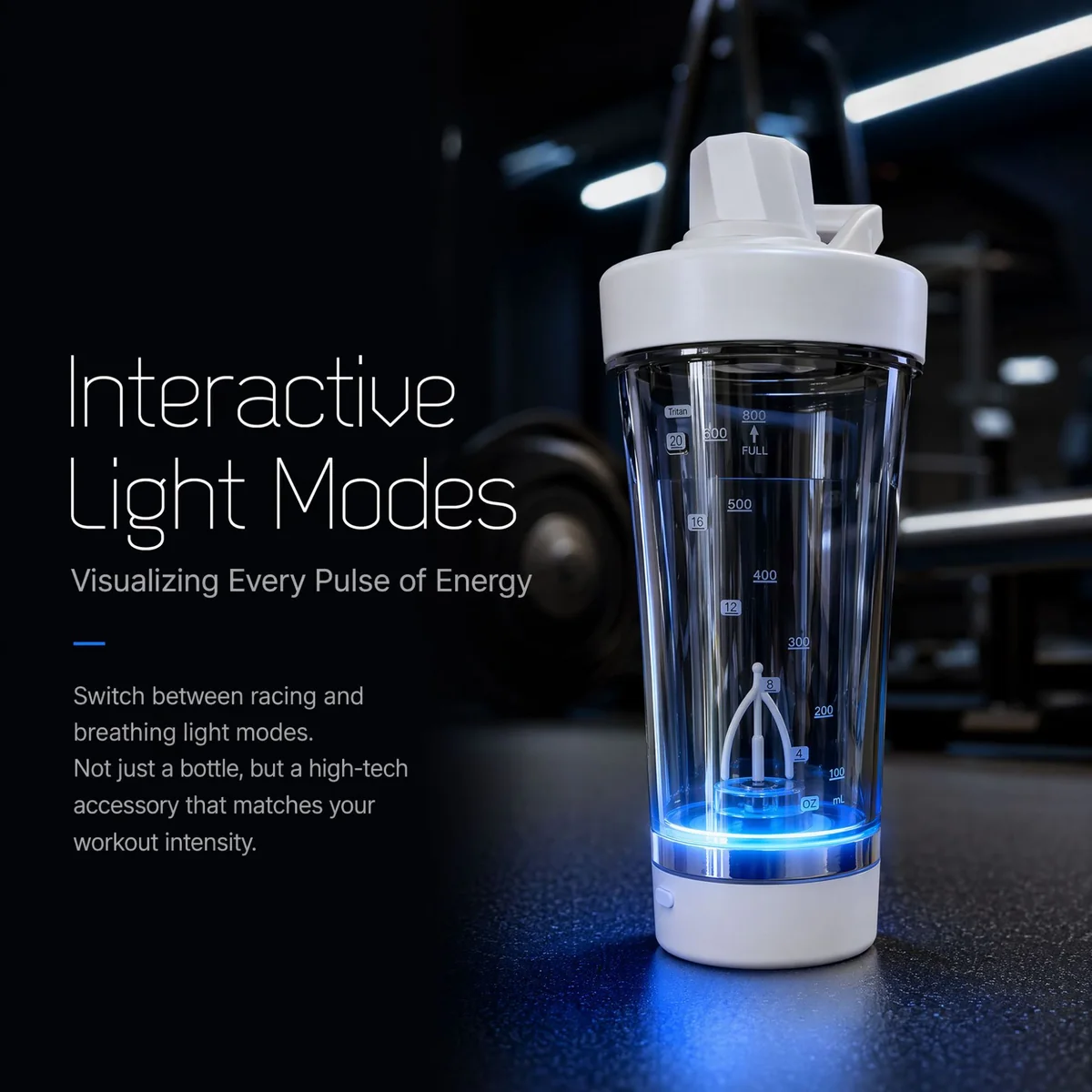
Model: VX100
VX100 Magnetic Self-Stirring Cup, 800 ml
An 800 ml cup that stirs with a magnetic rotor rather than a blade, so there is nothing sharp to clean. Tritan body with a 316 stainless liner, a base that separates, and an IPX6 whole-unit wash.
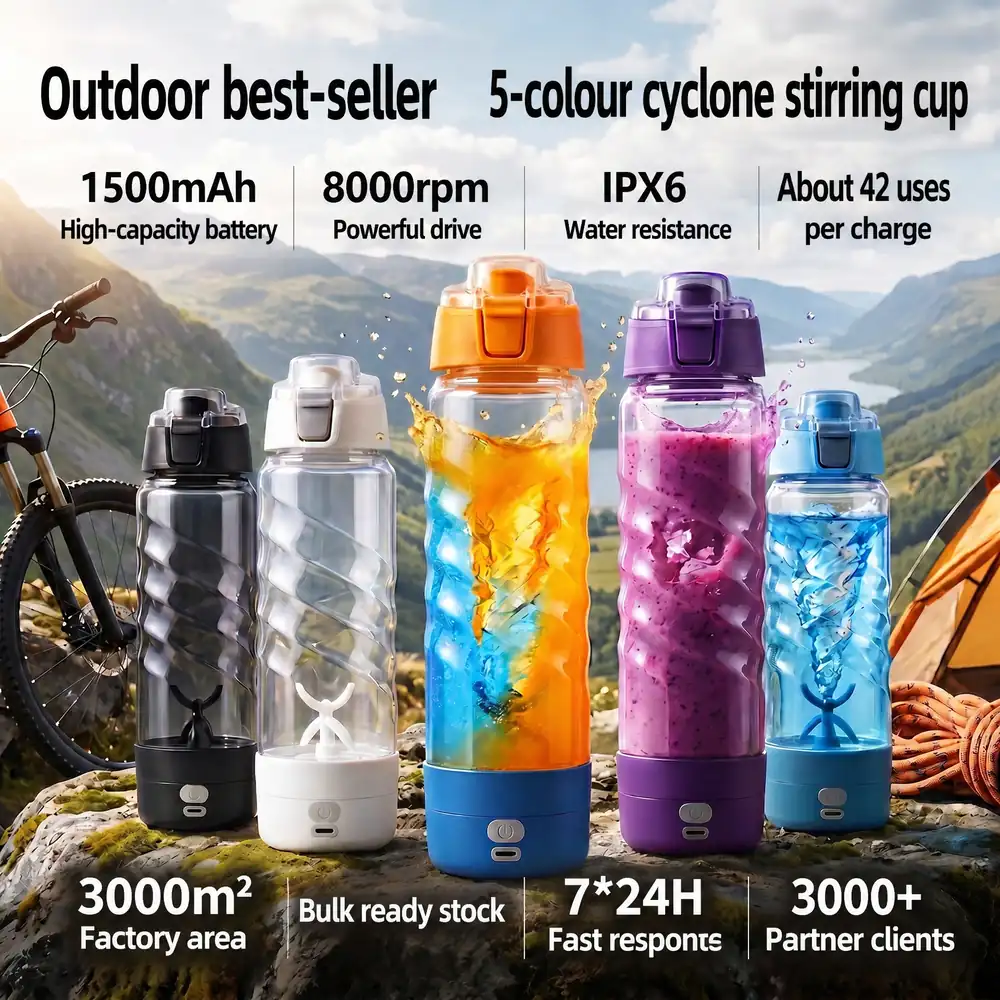
Model: EMC012-S
EMC012-S Electric Stirring Cup, 700 ml
A 700 ml outdoor stirring cup with an 8,000 rpm motor, a 1,500 mAh battery good for about 42 uses per charge, and IPX6 whole-unit water resistance. One press starts it and it stops itself after 30 seconds.
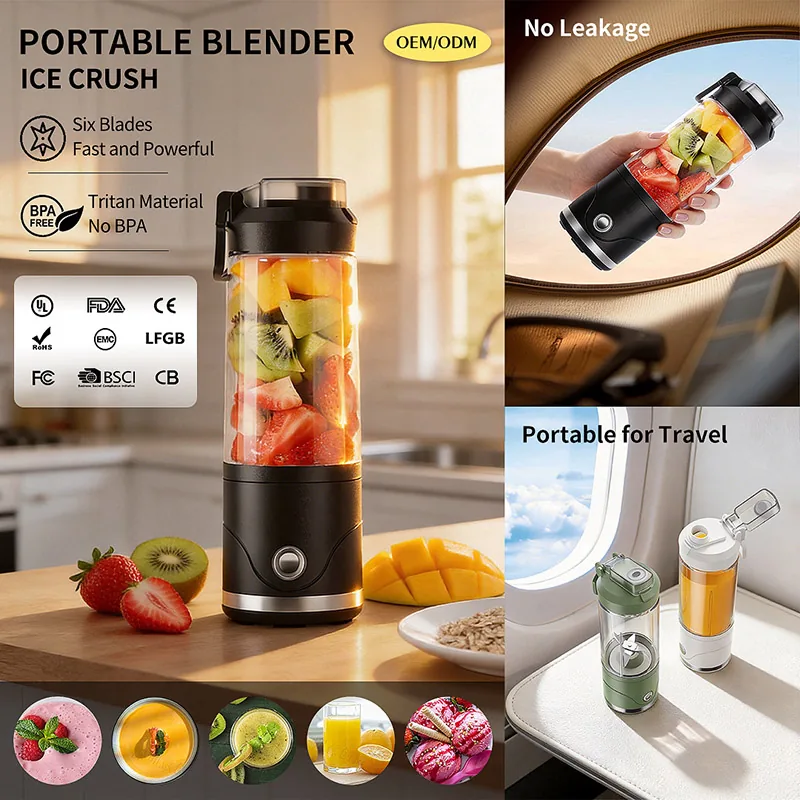
Model: P2501R
P2501R 75 W Portable Juicer Blender, 650 ml
75 W portable juicer cup running at 20,000 rpm with stainless-steel 304 blades, a 650 ml cup and USB charging.
Enquire about this model
Send your target quantity, market and branding requirements — we reply with a quotation and sample lead time.