

Technology
Magnetic Coupling vs Direct-Drive Shafts in Electric Shakers: How Sealless Design Eliminates Motor Failure
Published
Comparing magnetic rotor coupling and mechanical direct-drive shafts in electric shakers. Why sealless transmission prevents fluid leaks and motor burnout.
In portable electric shaker bottles, the mechanical transmission mechanism between the electric motor and the mixing blade determines both product lifespan and hygienic integrity. Traditional direct-drive appliances rely on a rotating steel shaft penetrating the bottom of the container, whereas modern magnetic coupling utilizes contactless torque transmission through a solid hermetic barrier.
Direct-drive vs magnetic coupling: transmission mechanics
The fundamental engineering difference lies in how kinetic energy transfers from the motor stator to the liquid vortex blade without compromising fluid containment.
| Design parameter | Direct-drive shaft system | Magnetic rotor coupling | B2B performance impact |
|---|---|---|---|
| Transmission interface | Physical stainless steel shaft | Contactless neodymium magnetic field | Eliminates physical wear between moving parts |
| Shaft sealing method | Dynamic rubber O-ring or lip seal | Static hermetic polymer or steel wall | Removes primary fluid leak and motor seizure risk |
| Rotational speed | Up to 9000 rpm under motor load | Synchronous coupling up to 9000 rpm | Maintains high-vortex mixing without shaft friction |
| Overload response | Motor stall and thermal coil stress | Magnetic slip disengagement | Protects motor electronics from ice or thick powder jams |
Failure modes of dynamic shaft seals in liquid drinkware
Mechanical shaft seals operate under harsh dynamic conditions inside sports nutrition drinkware. Over time, three primary degradation mechanisms compromise direct-drive shakers.
- Abrasive wear: Fine protein powder particles and crystalline supplements migrate into the seal lip, accelerating elastomer erosion at 9000 rpm
- Thermal and chemical aging: Repeated hot liquid exposure up to 100 C and acidic fruit juices degrade silicone flexibility, causing micro-gaps
- Motor fluid ingress: Fluid seepage along the rotating shaft corrodes copper motor windings and lithium battery terminals, leading to total device failure
Hygienic cleanability and 3-A sanitary compliance
Beyond mechanical durability, magnetic coupling dramatically improves food contact hygiene by eliminating microscopic crevices where whey protein and moisture accumulate.
- Crevice-free container floor: A seamless 316 stainless steel or Tritan bottom leaves zero stagnant zones for bacterial growth or odor retention
- Dishwasher and immersion safety: Hermetic sealing allows IPX6 water resistance ratings and full-body washing without moisture penetration
- Removable magnetic agitator: Detachable magnetic pills or blades facilitate complete 360 degree cleaning and autoclave sanitization
MIXVIEN shaker engineering: sealless vs modular configurations
MIXVIEN applies targeted drive architectures across its product line to match diverse commercial, gym, and outdoor performance requirements.
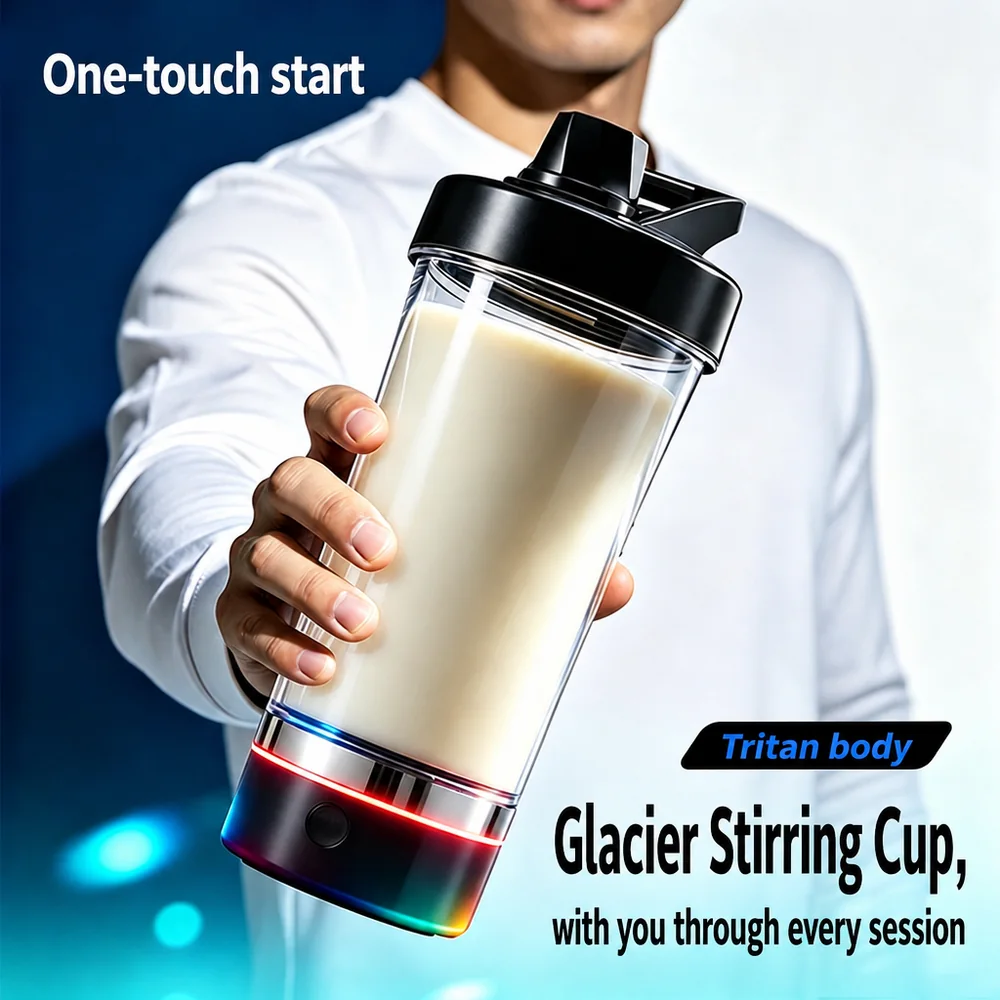
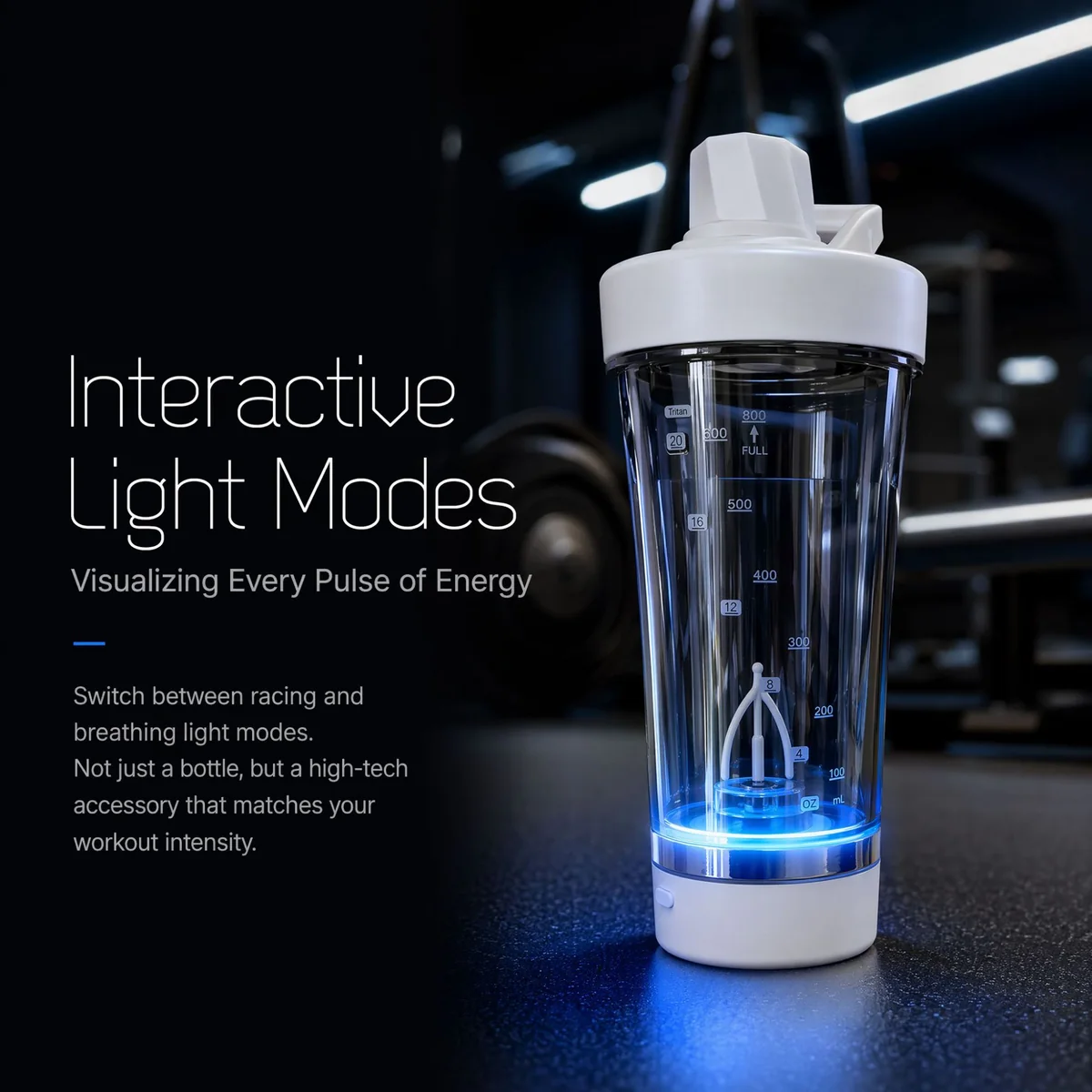
- VX100: 800 ml with 600 ml marked scale, seamless 316 stainless steel liner, IPX6 water resistance, 9000 rpm magnetic drive, and 1200 mAh lithium battery
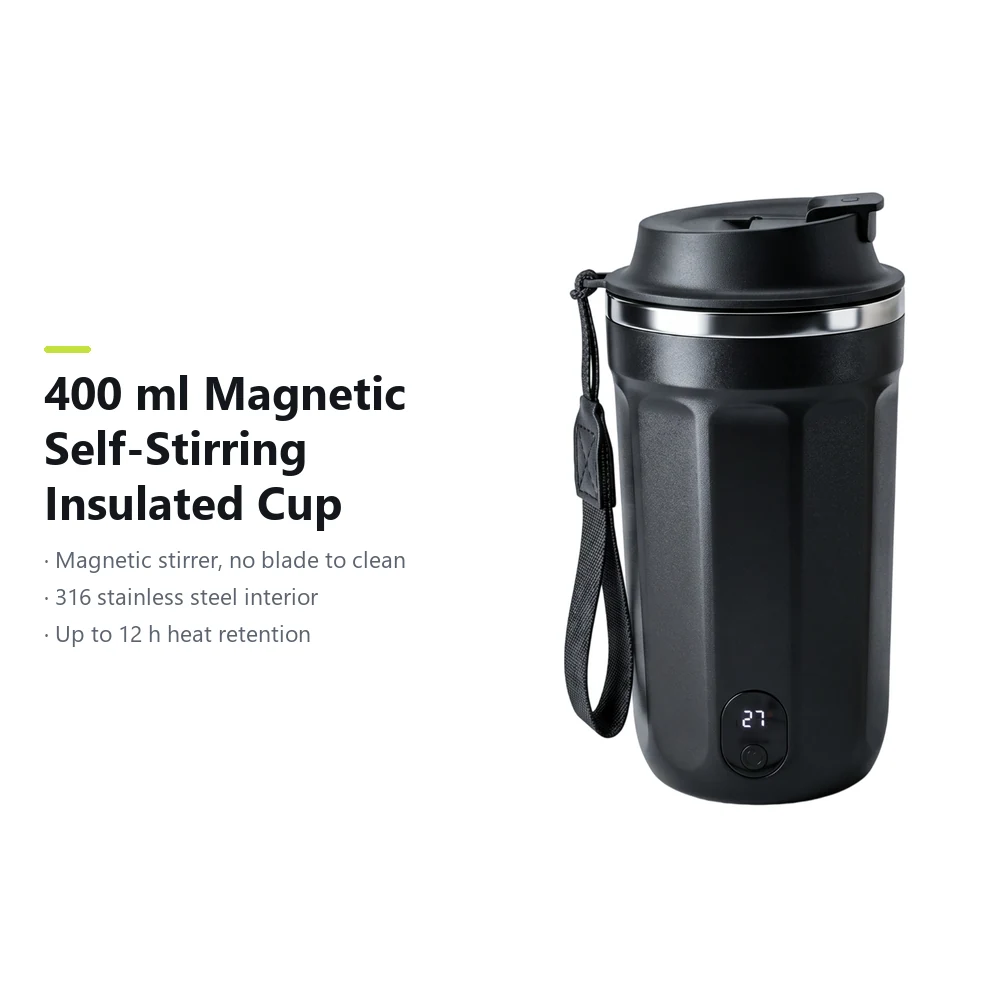
- P9T: 400 ml insulated tumbler with 12 hour thermal retention, food-grade 316 liner, compact magnetic capsule pill, and USB-C charging
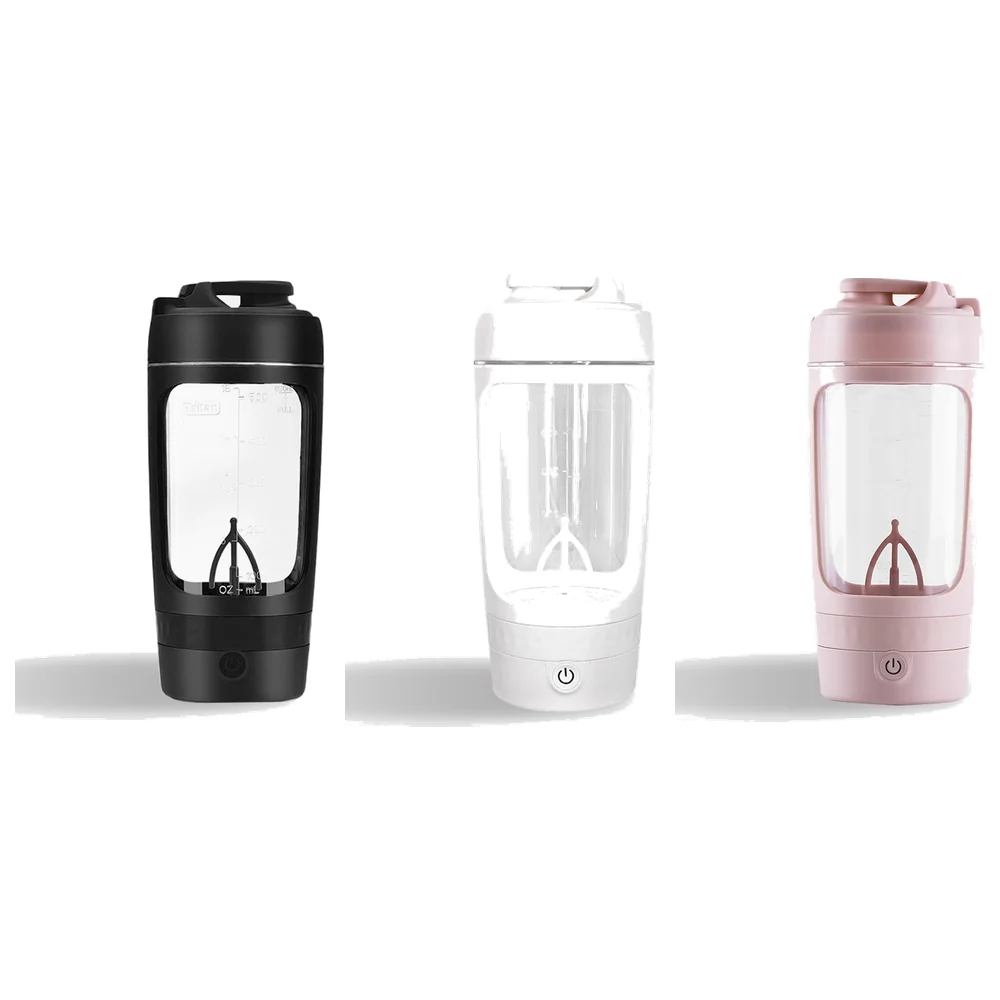
- VX90: 630 ml Eastman Tritan container, heat-resistant to 100 C, detachable modular motor base, 9000 rpm stirring paddle, and 1200 mAh battery
- 25700: 700 ml Eastman Tritan gym bottle with high-torque 7.4 V dual-cell motor system, integrated USB recharging, and leak-proof spout
Sourcing checklist for B2B drinkware buyers
When evaluating electric shakers for private label retail, fitness gym chains, or corporate gifting, procurement teams should verify specific mechanical benchmarks.
- Inspect seal architecture: Confirm whether the blade connects via static magnetic coupling or dynamic mechanical shaft seals
- Verify magnetic grade: Ensure high-temperature N42 or N52 neodymium magnets to prevent field demagnetization above 80 C
- Audit food-contact certification: Verify testing against FDA 21 CFR 177.2600 and LFGB standards for all wet-contact polymers
- Check motor stall protection: Validate automatic current shut-off or magnetic slip during blade obstruction
Sources
- Magnetic Coupling Principles and Sealless Pump Engineering: Chemical Engineering World (chemicalengineeringworld.com/magnetic-drive-pumps/)
- Dynamic Shaft Seal Reliability in Liquid Processing: Machinery Lubrication (machinerylubrication.com/Read/31518/dynamic-seals-failure)
- 3-A Sanitary Standards for Food and Beverage Equipment: 3-A Sanitary Standards Inc. (3-a.org)
- FDA 21 CFR 177 Food Contact Polymers Testing Guide: US Food and Drug Administration (fda.gov)
- Neodymium Magnet Temperature Stability and Thermal Demagnetization: Stanford Magnets (stanfordmagnets.com/neodymium-magnets-temperature-resistance.html)
- Electric protein shaker unboxing, leak tests, and magnetic rotor demonstrations: TikTok (tiktok.com/tag/electricshaker) (Audience signal)
- Gym nutrition drinkware and magnetic mixing vortex reviews: Instagram (instagram.com) (Audience signal)
Related models
Models referenced in this article.
Model: VX100
VX100 Magnetic Self-Stirring Cup, 800 ml
An 800 ml cup that stirs with a magnetic rotor rather than a blade, so there is nothing sharp to clean. Tritan body with a 316 stainless liner, a base that separates, and an IPX6 whole-unit wash.
Model: P9T
P9T Magnetic Self-Stirring Insulated Cup, 400 ml
400 ml insulated cup that stirs with a magnetic rotor rather than a blade, so there is nothing sharp to clean. The 316 stainless interior holds heat for up to 12 hours, and the display on the cup reads the temperature live.
Model: VX90
VX90 Detachable Electric Mixing Cup, 630 ml
Rechargeable 630 ml mixing cup with a 9,000 rpm stirring paddle. Lid, body and base all come apart for cleaning, and the US-imported Tritan body takes water up to 100 °C.
Enquire about this model
Send your target quantity, market and branding requirements — we reply with a quotation and sample lead time.