

Quality control
Eight Inspection Stations: How MIXVIEN Tests Every Blender
Published
From incoming inspection to appearance checks: the eight stations every MIXVIEN electric shaker bottle passes through, plus the certifications behind them.
"We do quality control" is not a specification. What follows is the actual sequence every MIXVIEN electric shaker bottle, portable blender and smart stirring cup passes through before it is packed — eight stations, starting with incoming components and ending with a visual check on the finished unit.
The eight stations, in order
The order is not arbitrary. Components are verified first, then the electrical parts, then the assembled unit, then the finished appearance. If a fault is going to be found, we want it found before the unit is sealed.
| # | Station | What it covers |
|---|---|---|
| 01 | IQC | Incoming inspection of supplied components |
| 02 | Motor Testing | The mixing motor before assembly |
| 03 | Battery Testing | The battery pack |
| 04 | PCB Testing | The control board |
| 05 | Switch Testing | The switch and control interface |
| 06 | Charge-Discharge Testing | Charging and discharge behaviour |
| 07 | OQC | Outgoing inspection on the assembled unit |
| 08 | Appearance Inspection | Visual check before packing |
Two of these deserve a closer look, because they are the ones buyers ask about most.
Incoming inspection and component testing
IQC is the gate on everything we did not make ourselves — housings, lids, seals, blades and electronics. A component that fails here never reaches a production line, which is cheaper for everyone than discovering it after assembly.
Motor, battery and PCB testing are separate stations rather than one electrical check, because the three fail for different reasons and need different test conditions:
- Motor Testing checks the drive unit in isolation, before it is built into a housing.
- Battery Testing covers the pack used across the rechargeable range, including the 500 mAh, 1,200 mAh and 1,500 mAh cells and the AAA-powered model.
- PCB Testing verifies the control board that handles speed control, the digital display on display-equipped models, and the 30-second auto-stop timer on some units.
- Switch Testing confirms the button or touch interface responds correctly before the unit is closed.
- Charge-Discharge Testing runs the charging cycle and checks that the unit holds and delivers power as expected.
Only after those pass does the assembled unit go through OQC, which is the outgoing check on a complete product rather than on a component. Appearance Inspection is the final visual gate: colour consistency, print quality from our pad printing line, moulding marks, and the cleanliness of the housing and seals.
Certification behind the stations
In-house testing is not a substitute for third-party testing, and we do not present it as one. Parts of our range carry the following testing and certification:
- Product-level: CE, RoHS, FCC, EMC, FCM, FDA, LFGB, UL, CB
- Factory-level: ISO 9001, ISO 14001
- Factory audit: TÜV Rheinland on-site audit, valid until 2027-09-01
These cover different things and should not be read interchangeably. FCC and EMC deal with electromagnetic behaviour. CE and RoHS cover European market access and restricted substances. FCM, FDA and LFGB relate to food-contact materials. UL and CB relate to the battery cells used in the rechargeable models. ISO 9001 and ISO 14001 are management-system certificates covering the production site and its environmental controls, and the TÜV Rheinland audit is an on-site assessment of the factory rather than a product certification.
Buyers should always ask which certificate applies to which component or market. A supplier that can answer that question precisely is usually the one running a real inspection system.
What you can ask for with an order
For a volume order, tell us at the quotation stage which documentation you need and we will confirm what can be provided:
- The certificate applicable to your destination market
- A test summary for the model you are ordering
- The production site's ISO and audit documentation
The reason to raise this early is that different destinations ask for different paperwork. A listing that clears European requirements is not automatically complete for a Gulf or Latin American importer, and knowing that before production avoids a delay at the port.
Why the sequence matters more than the count
Eight stations is a number. The useful part is that inspection happens at three separate points in the process — on components, on the assembled unit, and on appearance — rather than once at the end. A single final check catches only what is visible on a finished product; by then a component fault has already been built into a unit that has to be scrapped.
Minimum order quantities and pricing are confirmed on quotation and vary by model.
Related models
Models referenced in this article.
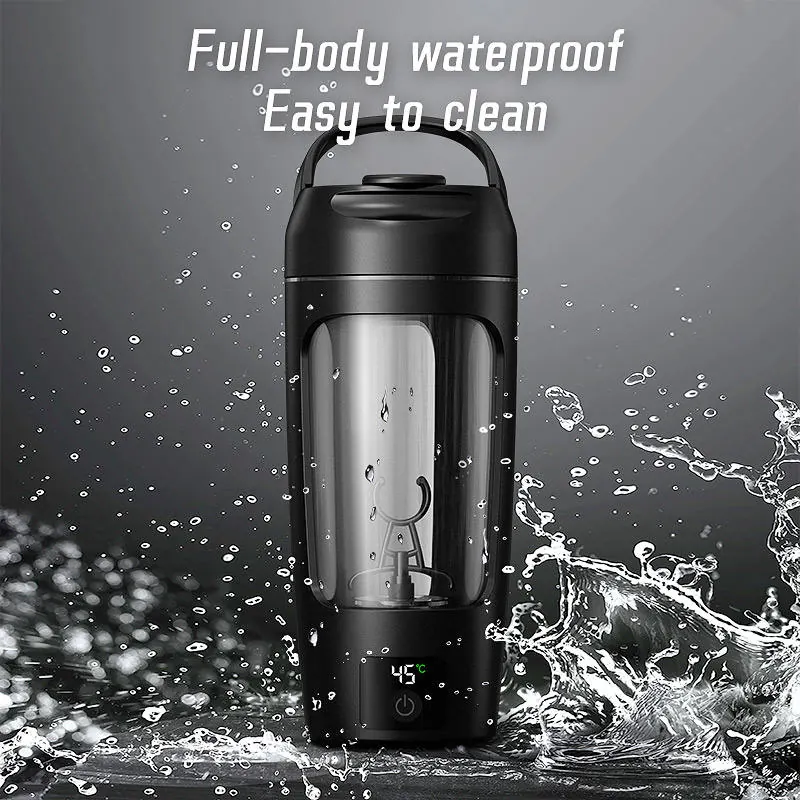
Model: 23652D
23652D Digital Display Electric Protein Shaker Bottle, 650 ml
Flagship rechargeable shaker with a digital temperature and battery display, 7,000 rpm mixing motor and USB Type-C charging.
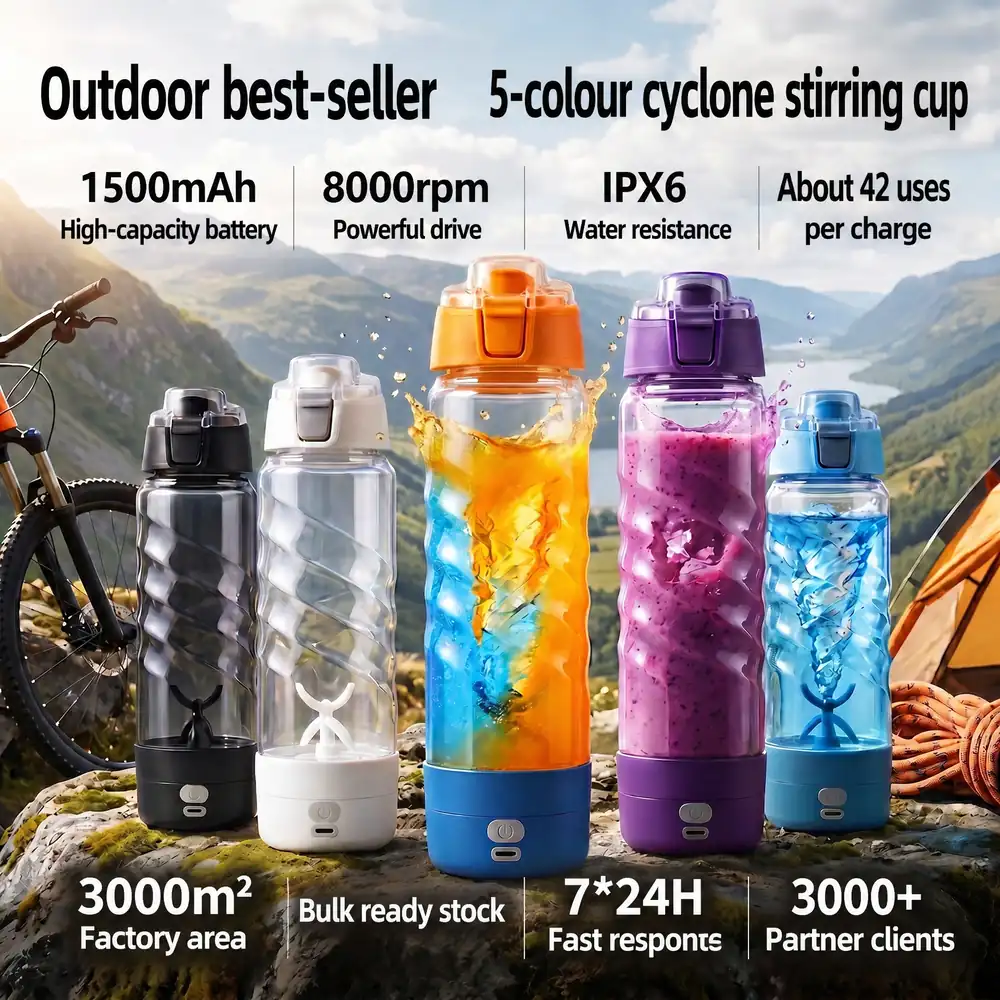
Model: EMC012-S
EMC012-S Electric Stirring Cup, 700 ml
A 700 ml outdoor stirring cup with an 8,000 rpm motor, a 1,500 mAh battery good for about 42 uses per charge, and IPX6 whole-unit water resistance. One press starts it and it stops itself after 30 seconds.
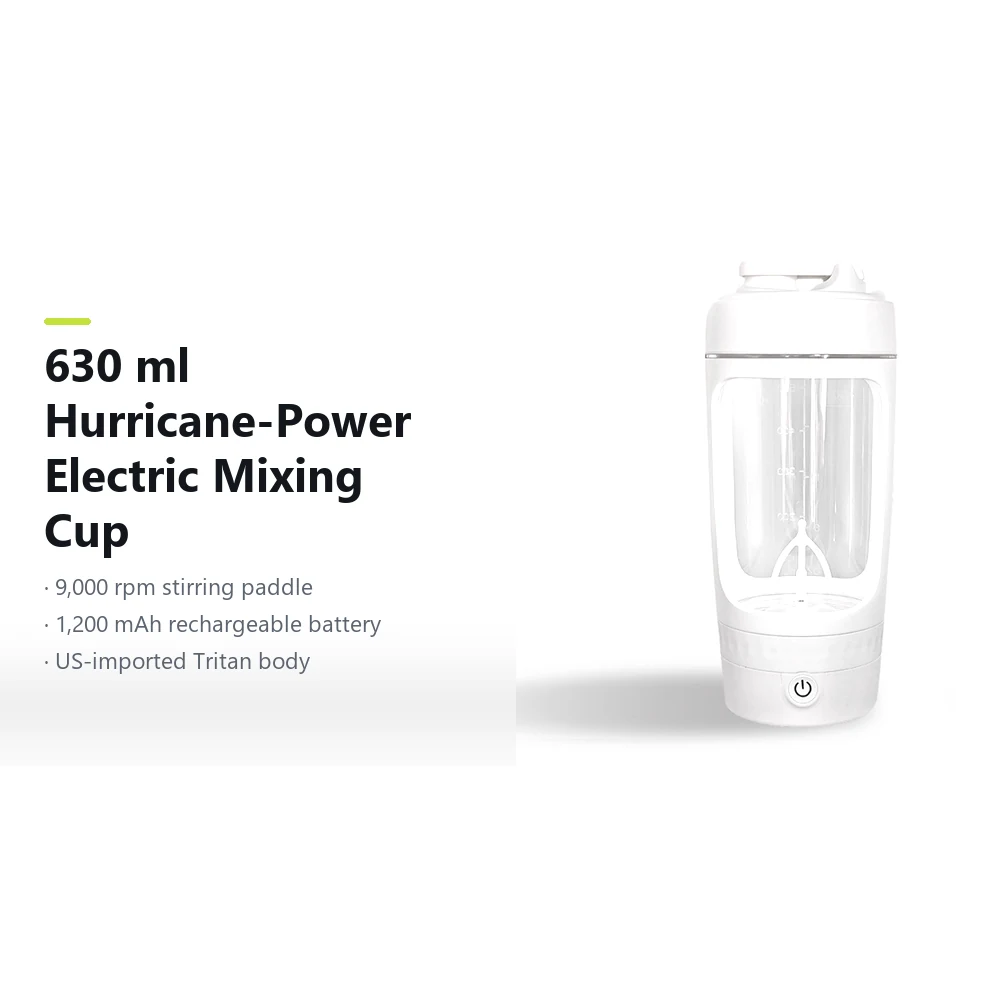
Model: VX90
VX90 Detachable Electric Mixing Cup, 630 ml
Rechargeable 630 ml mixing cup with a 9,000 rpm stirring paddle. Lid, body and base all come apart for cleaning, and the US-imported Tritan body takes water up to 100 °C.
Enquire about this model
Send your target quantity, market and branding requirements — we reply with a quotation and sample lead time.