

Technology
Lithium Battery and BMS Circuit Protection in Portable Electric Shakers: Overcharge, Thermal Runaway and UN 38.3 Compliance
Published
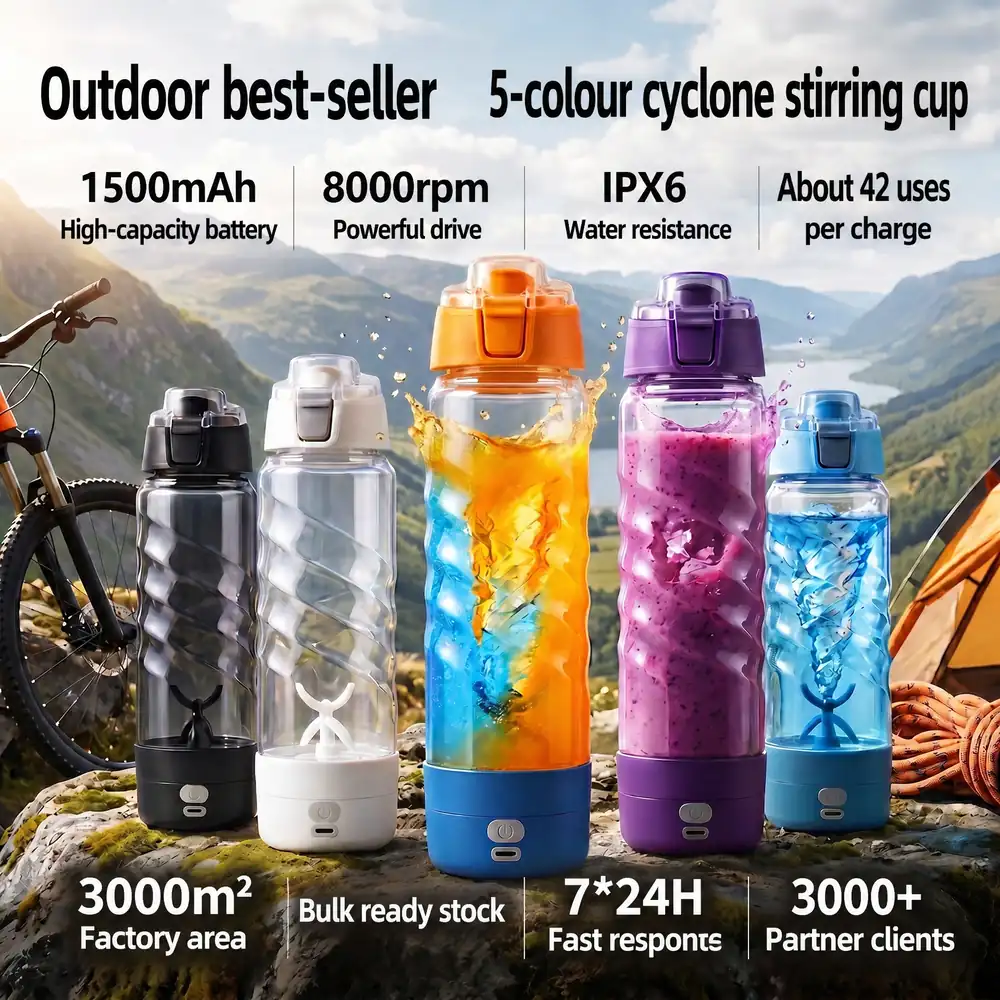
Analyzing lithium battery engineering and Battery Management System (BMS) circuit protection in motorized electric shakers: overcharge prevention, NTC thermal monitoring, and international transport compliance.
In motorized portable drinkware, lithium-ion battery integration enables high-torque protein mixing without corded power. However, commercial deployment requires robust Battery Management System (BMS) circuit architecture to prevent overcharging, cell shorting, and thermal runaway under frequent washdown and cyclic vibration.
BMS protection architecture: single-cell and dual-series battery configurations
Modern electric protein shakers utilize dedicated battery protection ICs paired with dual MOSFET switching arrays to monitor real-time operating parameters across charge and discharge cycles.
| Protection module | Operating threshold & mechanism | Response action | Standard benchmark |
|---|---|---|---|
| Overcharge protection (OVP) | Voltage ceiling monitoring between 4.25 V and 4.35 V per cell | Disconnects charging circuit via high-side MOSFET within 1.2 seconds | IEC 62133-2 Section 7.3.6 |
| Over-discharge protection (UVP) | Cutoff threshold set at 2.50 V to 2.80 V per cell | Enters ultra-low-current sleep mode to prevent copper dendrite formation | IEC 62133-2 Section 7.3.7 |
| Thermal monitoring (NTC) | Negative temperature coefficient thermistor cutoff at 60 C charge ceiling | Inhibits charging during high-temperature exposure and motor stall events | UL 2054 Clause 13 |
| Short circuit protection (SCP) | Current surge detection exceeding 3.5 A peak load | Instantaneous microsecond-level circuit cutoff | UN 38.3 Test T.5 |
Thermal runaway prevention and cell packaging standards
High-speed vortex motors operating between 7,000 rpm and 9,000 rpm generate inductive current spikes and localized heat within the motor base. Factory engineering combines 100 kΩ NTC thermal sensing with flame-retardant V-0 grade ABS structural housing to isolate the pouch cell from moisture ingress and mechanical shocks.
For dual-series 7.4 V battery configurations (such as model 23652D with 1,200 mAh capacity) and single-cell 3.7 V units (such as model EMC012-S with 1,500 mAh capacity and 8,000 rpm motor), independent cell balancing prevents cell degradation and maintains voltage parity across 500 charge cycles.
International transport and electrical testing compliance
Exporting lithium-powered drinkware across global logistics channels requires rigorous pre-shipment qualification to satisfy airline cargo and maritime safety mandates.
- UN 38.3 Transport Testing: Comprehensive altitude simulation (T.1), thermal cycling from -40 C to 72 C (T.2), vibration (T.3), shock (T.4), external short circuit (T.5), impact (T.6), overcharge (T.7), and forced discharge (T.8).
- IEC 62133-2:2017 & UL 2054 Safety: Evaluation of secondary lithium cells and battery packs under continuous charging, mechanical crush, and internal short-circuit stress conditions.
- EMC & Electromagnetic Compatibility: Suppression of motor brush noise and charging switching harmonics tested according to Directive 2014/30/EU and FCC Part 15 Class B.
B2B procurement guidelines for rechargeable electric shakers
When sourcing private-label motorized shakers, institutional buyers must review certified test reports covering UN 38.3 test summaries, SDS documentation, and cell batch traceability. Ensuring integrated BMS circuitry safeguards end-user safety while securing seamless customs clearance in European and North American markets.
Related models
Models referenced in this article.
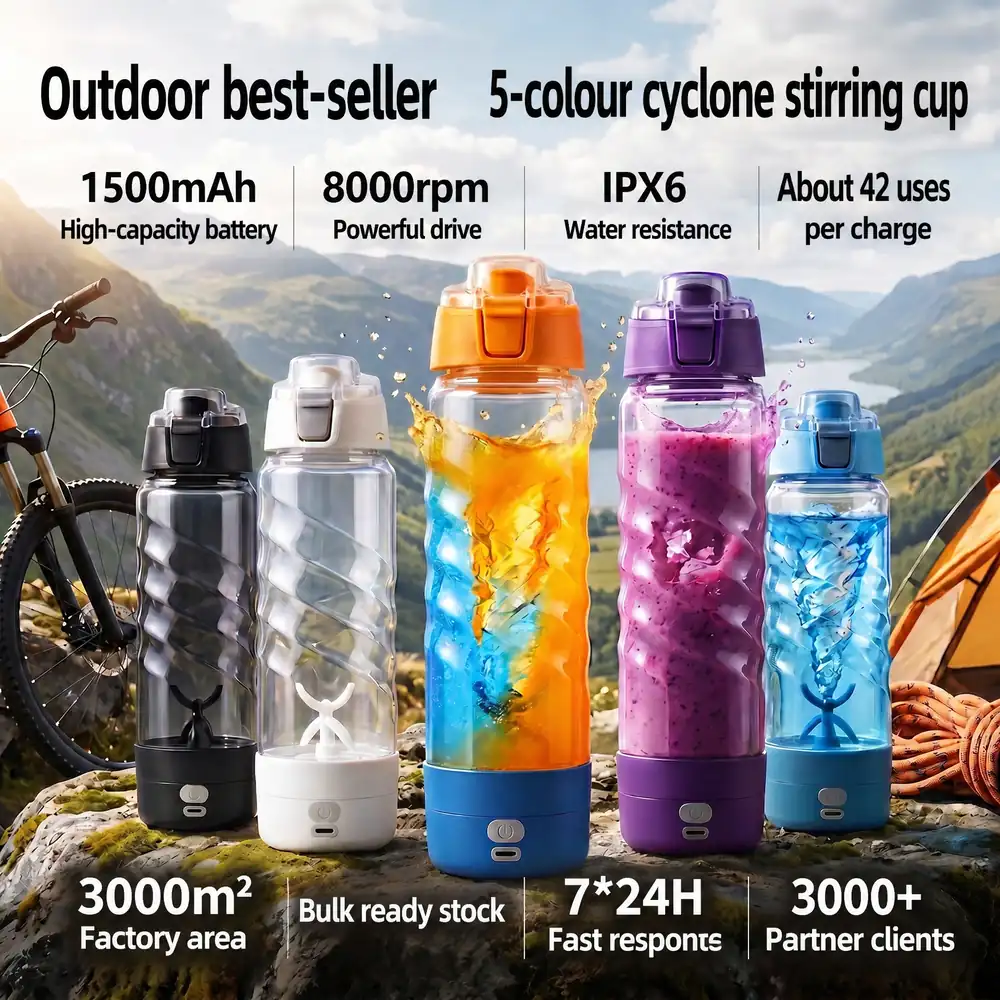
Model: EMC012-S
EMC012-S Electric Stirring Cup, 700 ml
A 700 ml outdoor stirring cup with an 8,000 rpm motor, a 1,500 mAh battery good for about 42 uses per charge, and IPX6 whole-unit water resistance. One press starts it and it stops itself after 30 seconds.
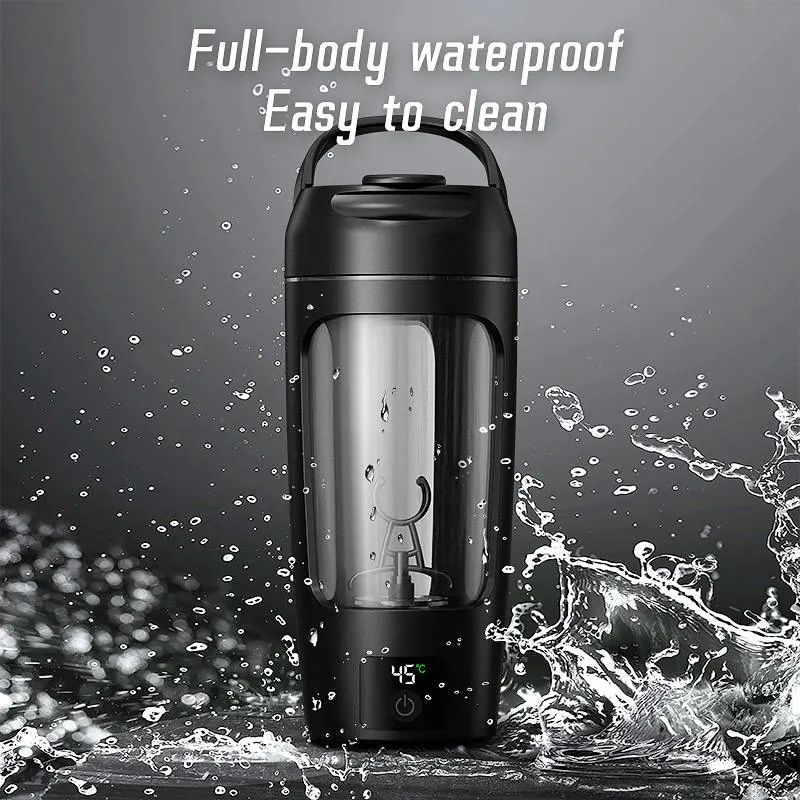
Model: 23652D
23652D Digital Display Electric Protein Shaker Bottle, 650 ml
Flagship rechargeable shaker with a digital temperature and battery display, 7,000 rpm mixing motor and USB Type-C charging.
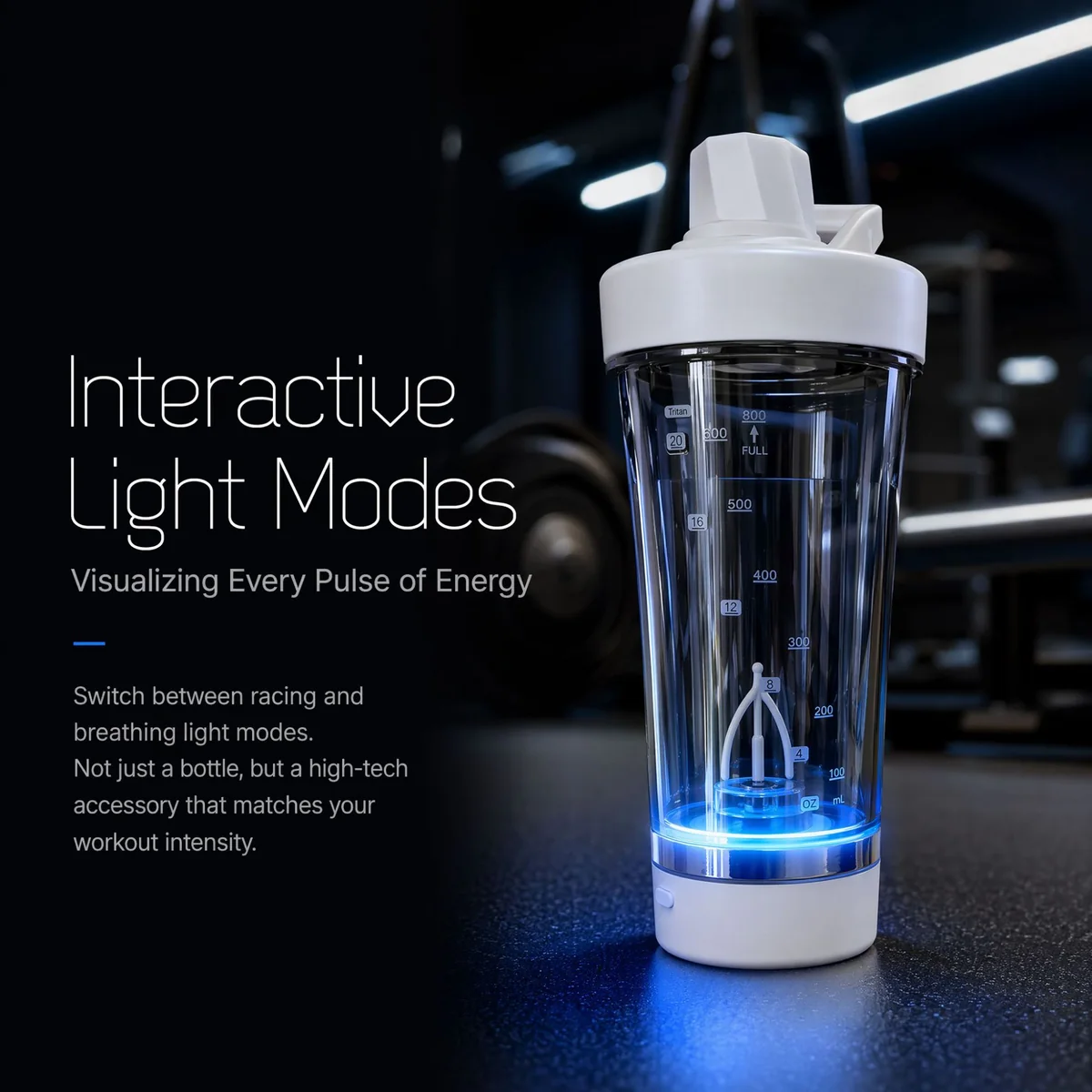
Model: VX100
VX100 Magnetic Self-Stirring Cup, 800 ml
An 800 ml cup that stirs with a magnetic rotor rather than a blade, so there is nothing sharp to clean. Tritan body with a 316 stainless liner, a base that separates, and an IPX6 whole-unit wash.
Enquire about this model
Send your target quantity, market and branding requirements — we reply with a quotation and sample lead time.