

OEM / ODM
OEM and ODM for Electric Shaker Bottles: How Development Works
Published
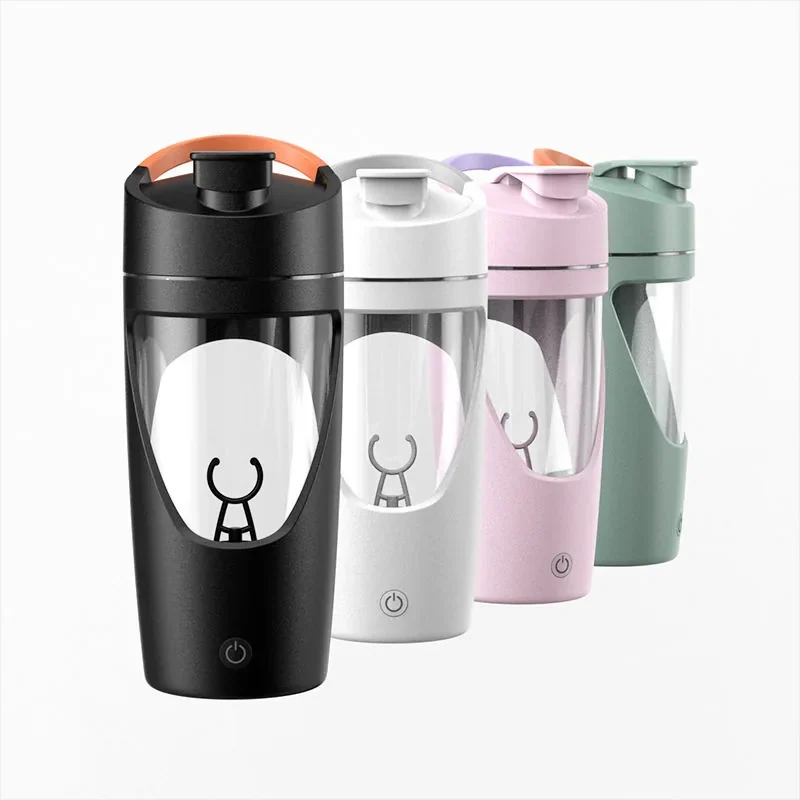
The difference between OEM and ODM, the six-step path from idea to approved sample, and what can be customised on a MIXVIEN electric shaker bottle or blender.
Most buyers arrive with one of two questions. Either they have a product in mind and need someone to build it, or they need a product and want to know what is achievable without designing from scratch. Those are OEM and ODM respectively, and the practical difference decides both the timeline and who owns the design.
OEM and ODM: what each one means in practice
The terms are used loosely across the industry, so it is worth being exact about how we apply them.
| OEM | ODM | |
|---|---|---|
| Design source | Supplied by the buyer | Developed by the factory |
| Typical starting point | Your drawings or a physical reference | An existing model in the catalogue |
| Customisation | Mould and specification set by you | Capacity, material, colour and branding adapted |
| Tooling | New private mould | Existing private mould, modified where needed |
| Best suited to | A brand with its own design language | A buyer entering a category for the first time |
Both routes are supported. An ODM order usually starts from one of the 29 models in the catalogue and adapts it; an OEM order starts from your specification. The six-stage path below applies to both — what changes is where your input lands in the sequence.
The six-step development path
- Idea — the concept, use case and target market are agreed.
- Drawing — the concept is turned into a 2D drawing with dimensions and key features.
- 3D — a 3D model is produced for review before any tooling is cut.
- Prototype — a physical prototype is built for handling and functional checks.
- Mould — the production mould is made, or an existing mould is modified.
- Sample — a finished sample from production tooling is prepared for your approval.
The step buyers underestimate is 3D. Reviewing a 3D model costs nothing but time; reviewing a prototype costs tooling money. Specification changes are far cheaper at step 3 than at step 5, which is why we push for a decision there rather than after the mould exists.
Once a sample is approved, production runs to a standard 30-day lead time. The sample itself is prepared in 3 days when it is based on an existing model.
What can be customised
Customisation is easiest to describe by layer, because each layer carries a different tooling cost.
- Body material — Tritan, ABS and stainless steel. Tritan where clarity and impact resistance matter, ABS where a coloured or printed housing is needed, stainless steel where thermal performance or a metal finish is required.
- Capacity — the catalogue currently spans 260 ml to 800 ml. Capacity changes affect the housing mould, so a figure outside the existing range is a tooling change rather than a decoration change.
- Colour and finish — colourways vary by model and are set by the mould and the material choice. Some models run gloss finishes, others matte.
- Printing and branding — pad printing is done in-house, so logos and markings are applied on site.
- Packaging — retail box, manual and accessory set can be specified per order.
Several models carry their own private mould, which means the tooling for that housing belongs to us and is not shared with other buyers of the same shape. If you need a housing that is exclusive to your brand, that is a new private mould and belongs in the OEM route rather than the ODM one.
Intellectual property
We currently hold 4 patents and 1 trademark. For buyers developing an exclusive product, settle three things before tooling: who owns the mould, whether the design can be sold to another customer, and how long exclusivity runs. Raise these at the drawing stage — they affect the quote.
Markets and market-specific requirements
Our current target markets are the Middle East, Southeast Asia, the European Union and Latin America. They are listed because requirements genuinely differ between them, and the differences show up in tooling and testing rather than in marketing.
- European Union — the market that most often drives material declarations and food-contact documentation.
- Middle East — frequently drives packaging format and larger capacity preferences.
- Southeast Asia — frequently drives lower capacity, lighter units and price-sensitive configurations.
- Latin America — frequently drives voltage and plug configuration decisions alongside packaging.
Telling us the destination at the quotation stage, rather than after sample approval, is the single change that most often shortens a development cycle.
Starting a project
To quote an OEM or ODM project we need the target market, the capacity and material you want, a quantity indication, and whether branding is on the product or only on the packaging. With those, a first response is typically within 4 hours.
Minimum order quantities and pricing are confirmed on quotation and vary by model and by the level of customisation.
Related models
Models referenced in this article.
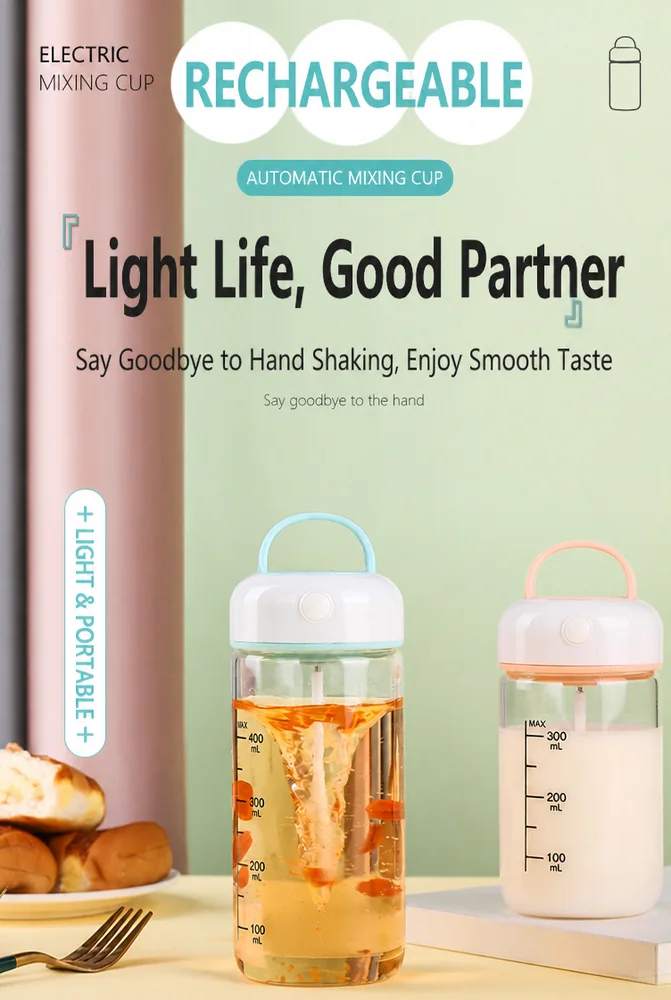
Model: BBJ01
BBJ01 Glass Electric Stirring Cup, 380-480 ml
A borosilicate glass stirring cup for coffee and powdered drinks, running at 7,000 rpm. Available in glass or PC, so you can choose the body that suits the market.
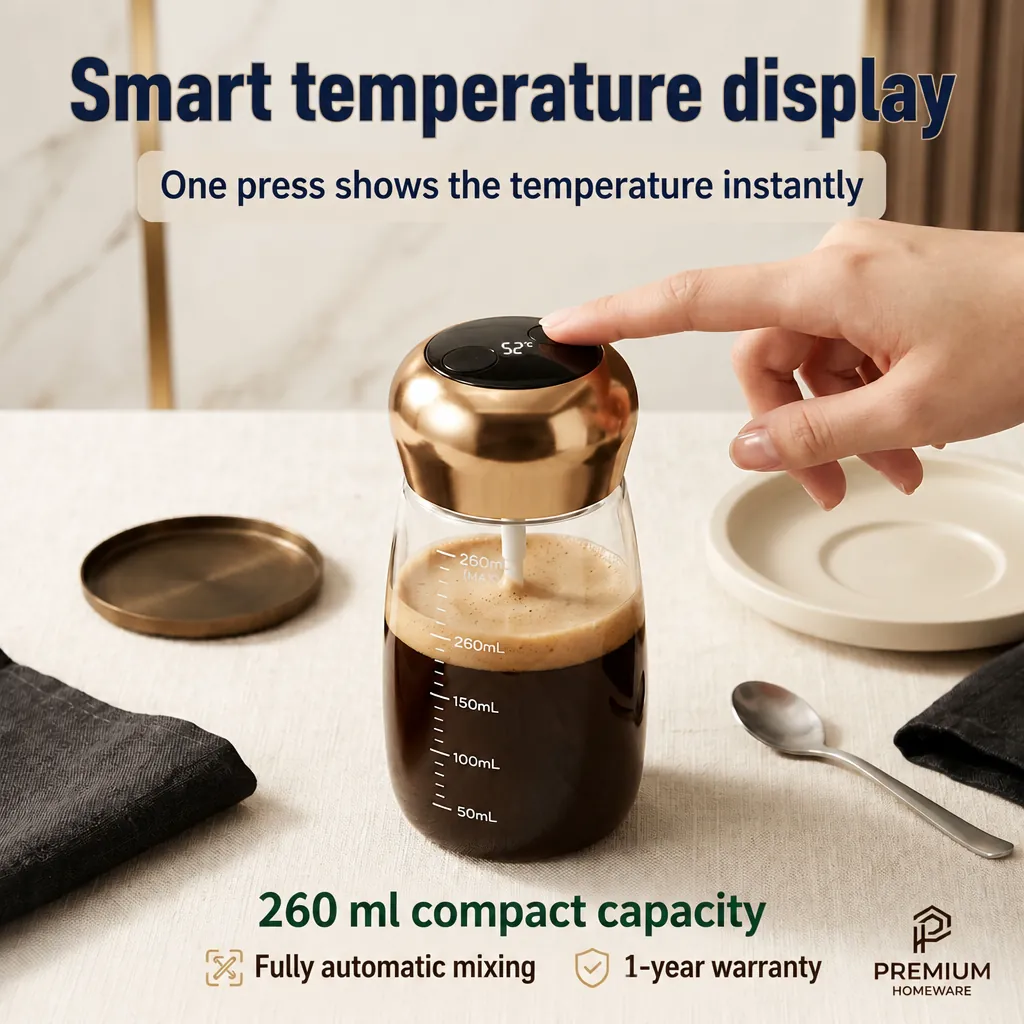
Model: P3
P3 Mini Electric Mixing Cup with Temperature Display, 200 / 260 ml
A compact mixing cup that reads the temperature as soon as the lid is pressed. Choose a baby-grade Tritan body at 260 ml or a borosilicate glass body at 200 ml; both are USB rechargeable, seal for travel and carry a one-year warranty.
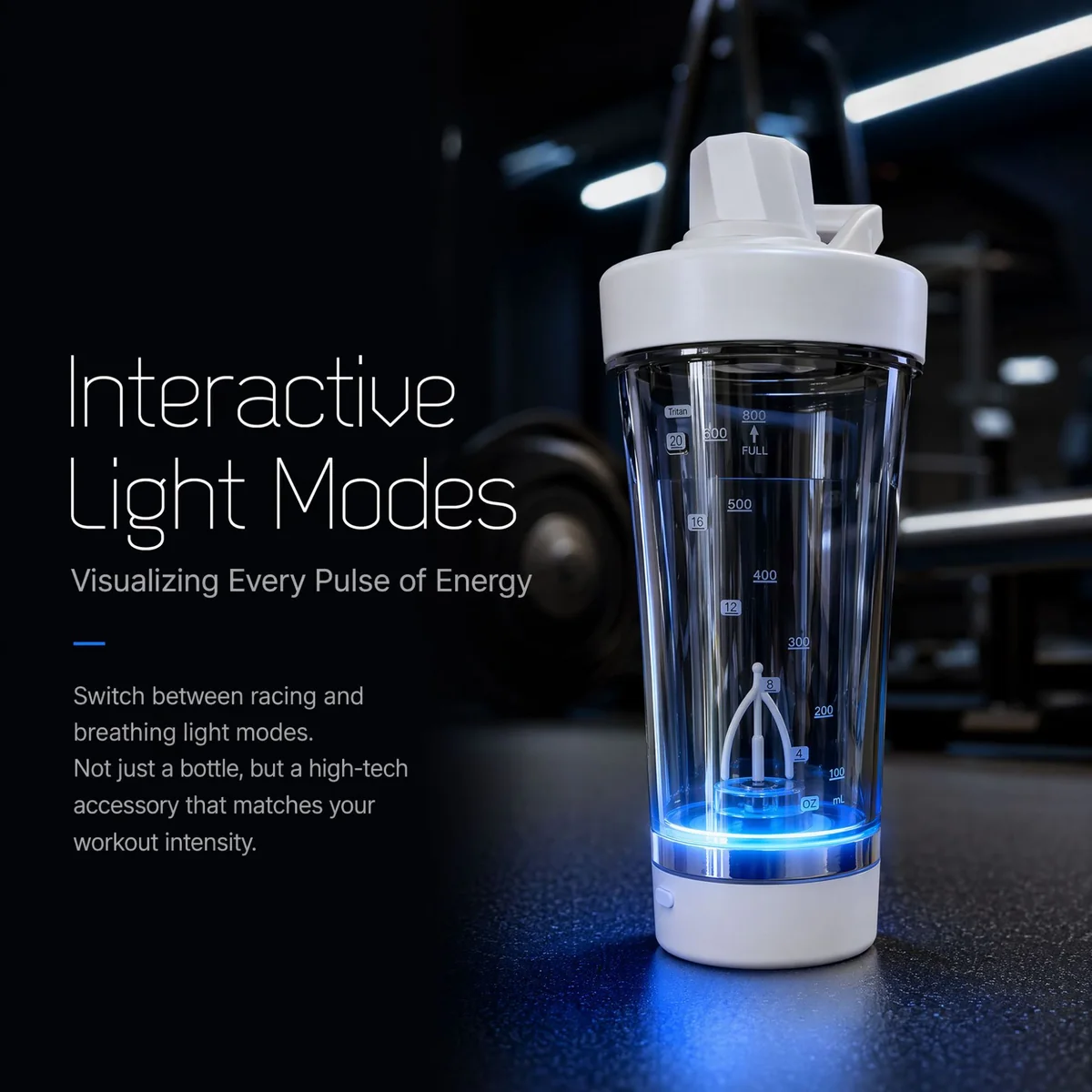
Model: VX100
VX100 Magnetic Self-Stirring Cup, 800 ml
An 800 ml cup that stirs with a magnetic rotor rather than a blade, so there is nothing sharp to clean. Tritan body with a 316 stainless liner, a base that separates, and an IPX6 whole-unit wash.
Enquire about this model
Send your target quantity, market and branding requirements — we reply with a quotation and sample lead time.