

Quality control
The 2026 Lithium Battery Air Rules, and What They Change for Powered Drinkware
Published
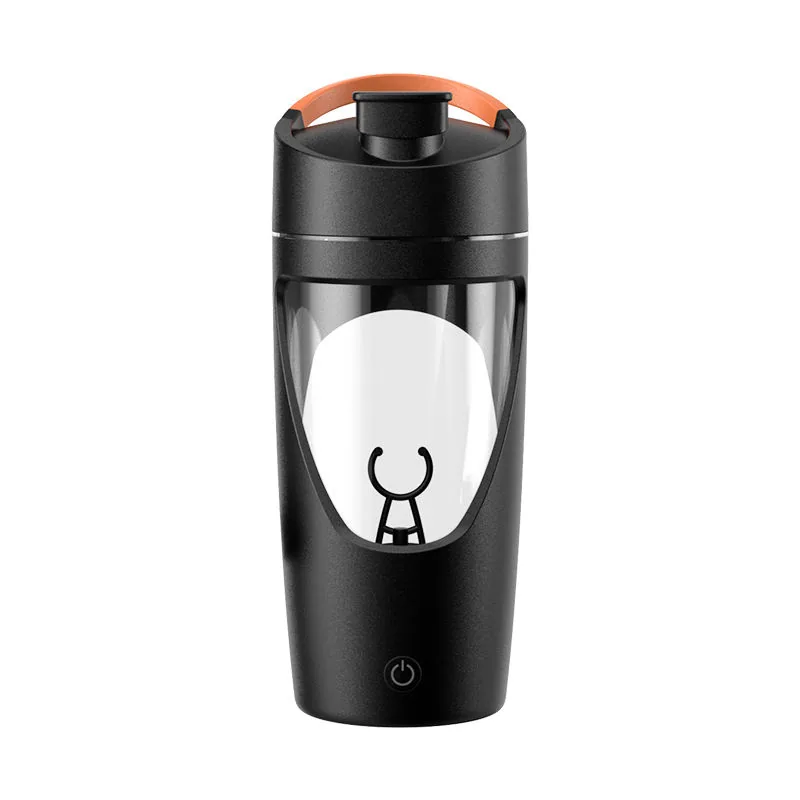
A rule that took effect on 1 January 2026 extends the 30% state-of-charge cap to lithium batteries packed with a device. For buyers of rechargeable mixing cups the change sits in the packing list, not in the product.
Every rechargeable mixing cup leaves the factory carrying a lithium battery, and that single component changes how the product may travel. On 1 January 2026 one of the rules around that cargo changed, and it applies to drinkware that has been charged before packing rather than to the cup itself.
What actually changed on 1 January 2026
Lithium batteries shipped on their own have been capped at a maximum state of charge of 30% for air freight since 1 April 2016. Batteries packed together with a device sat outside that cap. From 1 January 2026 the 30% limit applies to them as well. Batteries already installed in the finished device may still travel at a higher charge.
| How the battery travels | Charge limit | Status |
|---|---|---|
| Shipped alone, UN3480 | Maximum 30% | Required since 1 April 2016 |
| Packed with the device, UN3481 | Maximum 30% | Required from 1 January 2026 |
| Installed in the device, UN3481 | Up to 100% | Unchanged |
In practice the change lands unevenly. Most large cell manufacturers already produce and ship at or below 30%, so the shipments that need attention are the ones where the cup is charged during assembly or quality testing and then boxed with the cells still loose in the packaging. That is a production step, not a design change, which is why it is easy to miss.
The document that matters most
Cells and batteries offered for transport have to pass the design tests in Section 38.3 of the UN Manual of Tests and Criteria. Since 21 January 2022 the manufacturer of the cell or battery has been required to make the test summary available on request. That summary is the document a buyer should hold, because it is tied to the battery design rather than to a marketing claim.
The United States Department of Transportation treats lithium batteries as hazardous material and publishes the shipper guidance directly. The regulator's own instruction is to check with the battery manufacturer, distributor or product vendor whether a design has passed the tests, or to obtain the test summary.
The numbers that appear on the paperwork
- UN3480 covers lithium ion cells or batteries shipped on their own
- UN3481 covers lithium ion cells or batteries contained in or packed with equipment
- UN3090 and UN3091 are the lithium metal equivalents
- The packing instruction differs by case, which is why the charge rule does not apply to all of them equally
Where our own rechargeable models sit
MIXVIEN builds its powered cups around rechargeable lithium cells. The published data lists 1200 mAh for the VX90 and the VX100, and the 25700 charges over USB. Our product pages state capacity in milliamp hours, which is a different unit from the watt hours used for transport thresholds, so the two figures should not be read as equivalent. We also do not claim UN38.3 test summaries for these models: that test is a battery design approval, and it is not one of the certifications we list.
What to keep in the shipping file
- The UN38.3 test summary for the cell or battery design, not a generic certificate of conformity
- The correct UN number and packing instruction for the way the cells travel
- A record of the state of charge at packing if the cells ship loose with the device
- Confirmation of whether the shipment moves by air, sea or road, since the air rule is the strictest
Sources
- US Department of Transportation, PHMSA, Transporting Lithium Batteries (regulator): https://www.phmsa.dot.gov/lithiumbatteries
- PHMSA, Lithium Battery Guide for Shippers (regulator): https://www.phmsa.dot.gov/training/hazmat/lithium-battery-guide-shippers
- IATA, Lithium Battery Guidance Document, 1 January 2026 (rule issuer): https://www.iata.org/contentassets/05e6d8742b0047259bf3a700bc9d42b9/lithium-battery-guidance-document.pdf
- IATA, Dangerous Goods Regulations, 67th edition, addendum 1, 1 January 2026 (rule issuer): https://www.iata.org/contentassets/90f8038b0eea42069554b2f4530f49ea/dgr-67-addendum-1---en---01-january-2026.pdf
- Jauch, UN 38.3 new regulations for the air transport of lithium batteries from 2026, 15 January 2026 (battery manufacturer technical note): https://www.jauch.com/blog/en/un-38-3-new-regulations-for-the-air-transport-of-lithium-batteries-from-2026/
- ComplianceGate, UN 38.3 requirements for lithium batteries, a practical guide (industry): https://www.compliancegate.com/un-38-3-guide/
- Large Power, lithium battery transportation regulations (industry): https://www.large-battery.com/blog/lithium-battery-transportation-regulations-2025/
- Auspace, best 10 protein shaker bottles for 2026, assessed for OEM buyers (industry survey): https://auspacekitchenware.com/best-10-protein-shaker-bottles-for-2026/
- Lion Technology, 2026 lithium battery state of charge cheat sheet, 11 December 2025 (industry): https://www.lion.com/lion-news/december-2025/new-lithium-battery-state-of-charge-limit-in-effect-jan-1
- Audience signal, TikTok trend page for electric bottles in gym content: https://www.tiktok.com/discover/discipline-gym-meme-shaker-bottle
- Audience signal, creator unboxing of a shaker seen in paid social: https://www.tiktok.com/@megatron.lifts/video/7317324414008249633
Related models
Models referenced in this article.
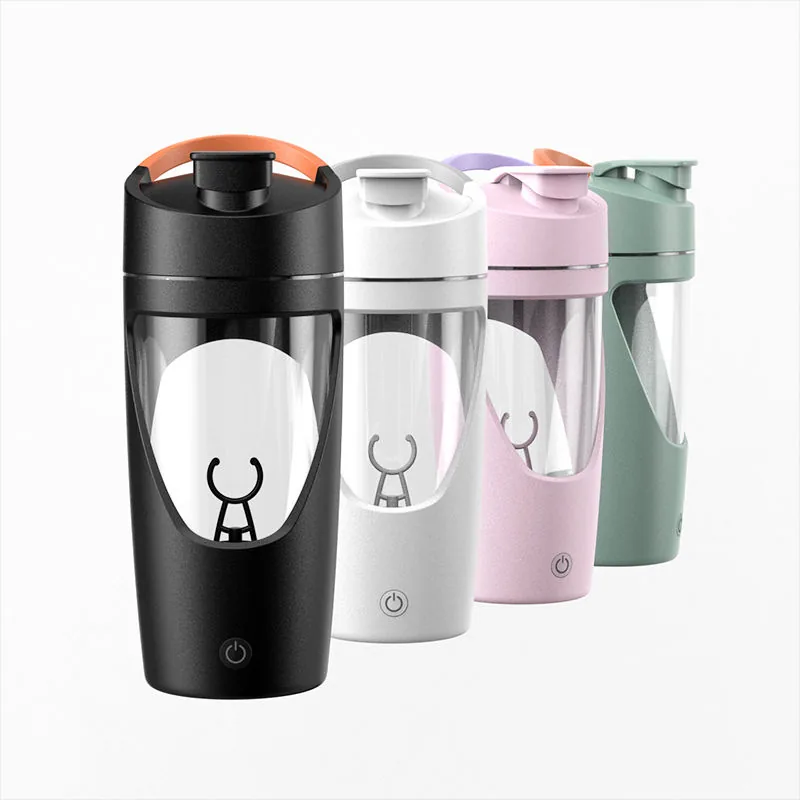
Model: 25700
25700 Rechargeable Electric Protein Shaker Bottle, 700 ml
Ready-to-ship 700 ml shaker built from Eastman Tritan, USB rechargeable, available in four body colours for private-label programmes.
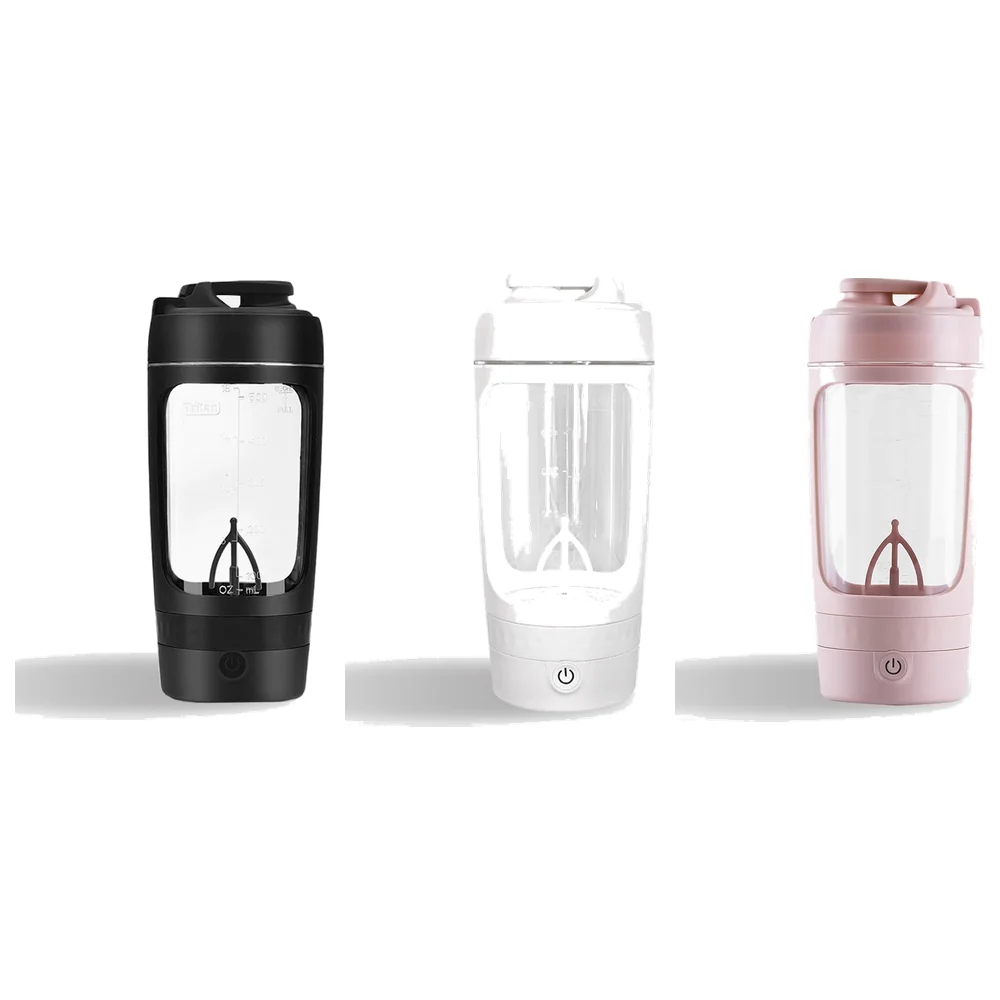
Model: VX90
VX90 Detachable Electric Mixing Cup, 630 ml
Rechargeable 630 ml mixing cup with a 9,000 rpm stirring paddle. Lid, body and base all come apart for cleaning, and the US-imported Tritan body takes water up to 100 °C.
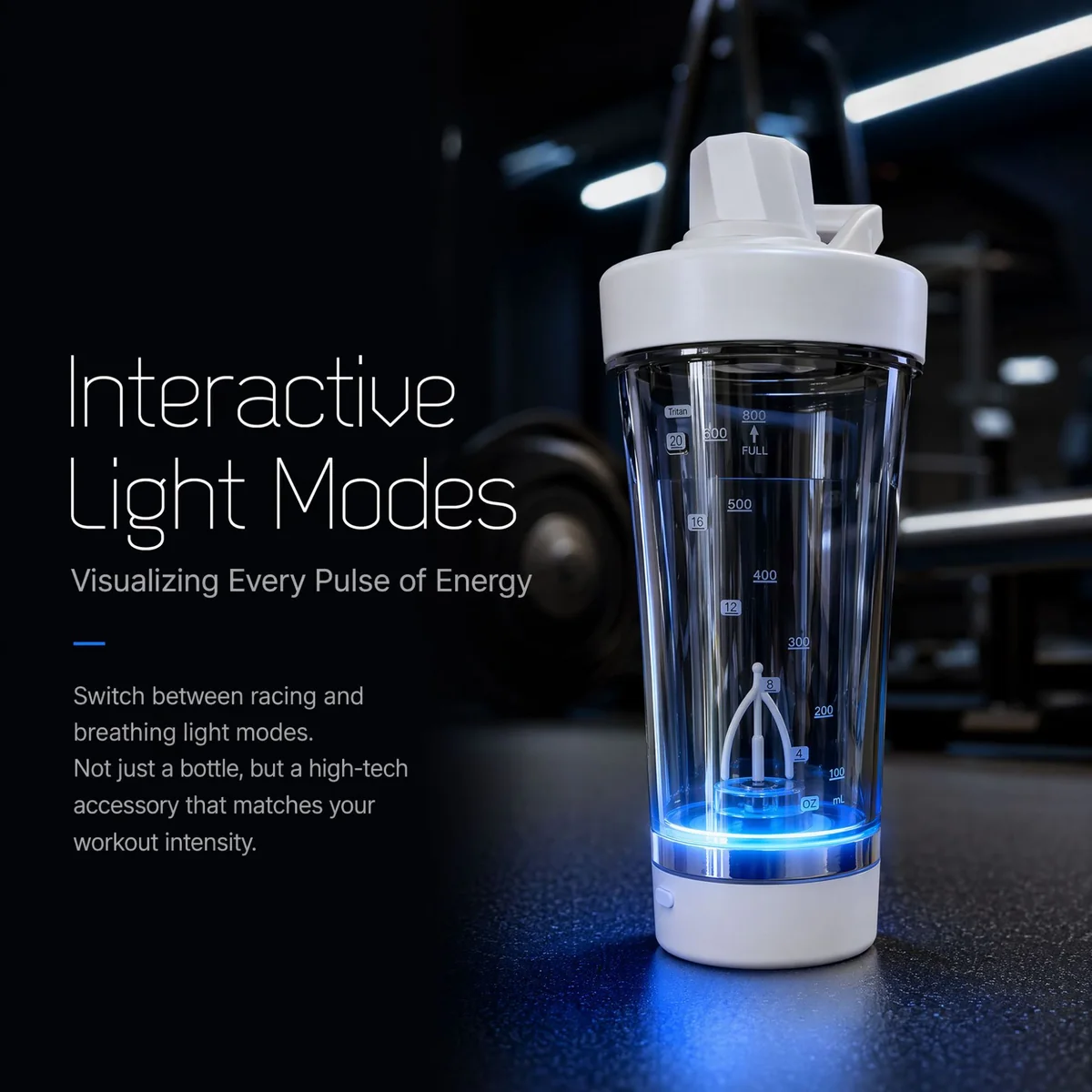
Model: VX100
VX100 Magnetic Self-Stirring Cup, 800 ml
An 800 ml cup that stirs with a magnetic rotor rather than a blade, so there is nothing sharp to clean. Tritan body with a 316 stainless liner, a base that separates, and an IPX6 whole-unit wash.
Enquire about this model
Send your target quantity, market and branding requirements — we reply with a quotation and sample lead time.